Curiouser and Scarier: How Horror Games Learned to Think Like Wonderland
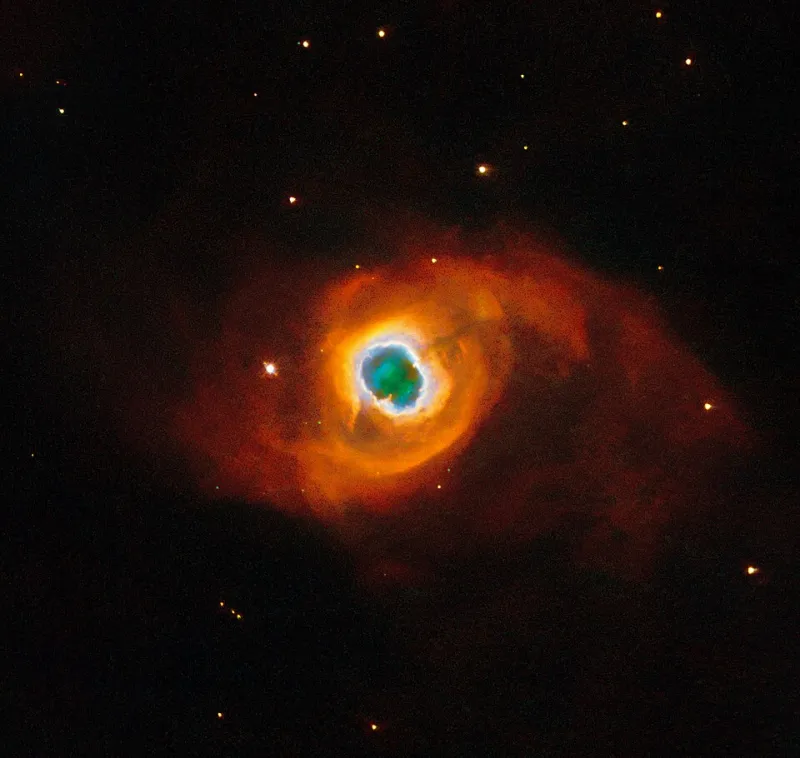
Photo: ESA/Hubble & NASA, K. Noll, CC BY 4.0, via Wikimedia Commons
There's a specific flavor of dread that hits differently from a jump scare or a monster chase. It's the feeling you get when the rules of a game world shift without warning, when a door leads somewhere it shouldn't, when a character asks you who you are and you realize you genuinely don't know how to answer. If you've spent any time in Alice fandom, you recognize that feeling immediately. It's Wonderland. And somehow, it's absolutely everywhere in modern horror gaming.
This isn't a coincidence. Developers have been quietly raiding Wonderland's toolbox for years, and the results are some of the most psychologically unsettling games on the market. The question worth asking — especially for fans who've grown up with Alice lore — is why it works so well, and what exactly is being borrowed.
The Rules That Aren't Rules
One of the foundational tricks of Wonderland storytelling is that logic exists, but it's inverted or broken just enough to feel deeply wrong. The Queen of Hearts has rules. The Mad Hatter's tea party has etiquette. But none of it maps onto anything Alice — or the reader — can reliably predict. You're always playing catch-up, always slightly off-balance.
Horror games have leaned hard into this exact mechanic. Think about titles like Amnesia: The Dark Descent, where the rules of sanity and perception warp the environment around you in ways that feel arbitrary until you're deep enough in to realize there's a horrible internal consistency. Or Omori, which uses a pastel, childlike dreamworld as a wrapper for some of the most emotionally devastating content in gaming — a structure that's basically Wonderland's DNA recombined into something new and brutal.
The genius of borrowing Wonderland logic here is that players arrive with an emotional vocabulary already loaded. We've been trained since childhood to understand that a world where things almost make sense is more frightening than a world that makes no sense at all. Developers know this. They're counting on it.
Identity as the Real Monster
If you had to pick the single most Alice-coded theme in modern horror gaming, it's identity dissolution. Alice's whole journey is a negotiation of selfhood — she keeps being asked who she is, keeps shrinking and growing, keeps losing pieces of herself to a world that refuses to confirm her existence. That's terrifying. That's also the backbone of some of the best psychological horror games out there.
Silent Hill 2 is the obvious touchstone here — James Sunderland's journey is fundamentally about a man who doesn't know who he is anymore, navigating a world that keeps showing him versions of himself he can't accept. Layers of Fear does the same thing with an artist whose creative identity literally fractures the architecture around him. Even Disco Elysium, which sits more on the RPG side of the fence, drops you into the role of a man who has lost his entire sense of self and must rebuild it from scratch — with the game world actively reshaping itself based on what identity you choose to reconstruct.
For Alice fans, this lands with a particular resonance. We've spent years analyzing what it means that Wonderland keeps demanding Alice prove herself, keeps stripping away her certainty. When a horror game puts you in that same position, the familiarity makes it worse, not better. You know this feeling. You know it doesn't end cleanly.
The Comfort That Makes the Horror Hit Harder
Here's the really clever part, and it's something worth sitting with. Alice in Wonderland is, for most American audiences, a childhood touchstone. Disney's 1951 animated film, the books, the countless adaptations — Wonderland is woven into our cultural comfort zone. It's associated with whimsy, with wonder, with the safe strangeness of childhood imagination.
Horror games that borrow Wonderland's logic are essentially weaponizing that comfort. When a game presents you with a tea party that turns sinister, or a hallway that stretches impossibly, or a character who asks you philosophical questions in a way that feels playful until it doesn't — your brain fires two signals at once. I know this. I am safe here. And then immediately: Something is very wrong.
That dual signal is gold for horror developers. It's the same reason American McGee's Alice — the 2000 game that's basically the granddaddy of this whole conversation — still holds up as a genuinely disturbing experience. It took the specific aesthetic comfort of Wonderland and systematically corrupted it. Players weren't just scared; they were grieving something. That's a much harder emotional hit to land, and Wonderland's cultural footprint made it possible.
What Developers Are Actually Stealing
Let's get specific about the techniques, because it's not just vibes. Here's the Wonderland toolkit that keeps showing up:
Nonsensical authority figures. The Queen of Hearts is terrifying not because she's powerful, but because her power is arbitrary. Horror games love this — think of the Examiner in Inscryption, or the bureaucratic nightmare logic of Bureaucracy adjacent horror titles, where the entity in charge makes rules that exist only to trap you.
Scale distortion. Alice grows and shrinks constantly, and her relationship to her environment is always unstable. Games like Superliminal and Control use exactly this — environments and objects that don't behave at a consistent scale, creating a low-grade wrongness that never lets you settle.
Friendly things that shouldn't be. The Cheshire Cat is helpful and terrifying in equal measure. Horror games have built entire design philosophies around guides and companions that feel warm but wrong — the Radio in Silent Hill, the Observer in various indie horror titles, entities that assist you while making your skin crawl.
Why This Matters to Alice Fans Specifically
If you're deep in the Alice fandom — if you've spent time parsing the symbolism in Carroll's original text, debating the psychology of Wonderland's inhabitants, or tracking how different adaptations handle the horror that's always been latent in the source material — you're actually one of the best-equipped players for this genre of game.
You already speak the language. You understand that the disorientation is the point, that the authority figures aren't meant to be trusted, that the question of identity is never fully resolved. When horror games borrow these structures, you're not just a player — you're a reader who already knows the genre conventions, encountering them in a new medium.
And that's a genuinely cool position to be in. The rabbit hole runs deeper than most players realize. For Alice fans, it just feels like coming home — to a very dark, very strange house where something is definitely watching from the corner.
Welcome back down.