Ranked: 15 Alice in Wonderland Adaptations From 'Mostly Faithful' to 'Absolutely Unhinged'
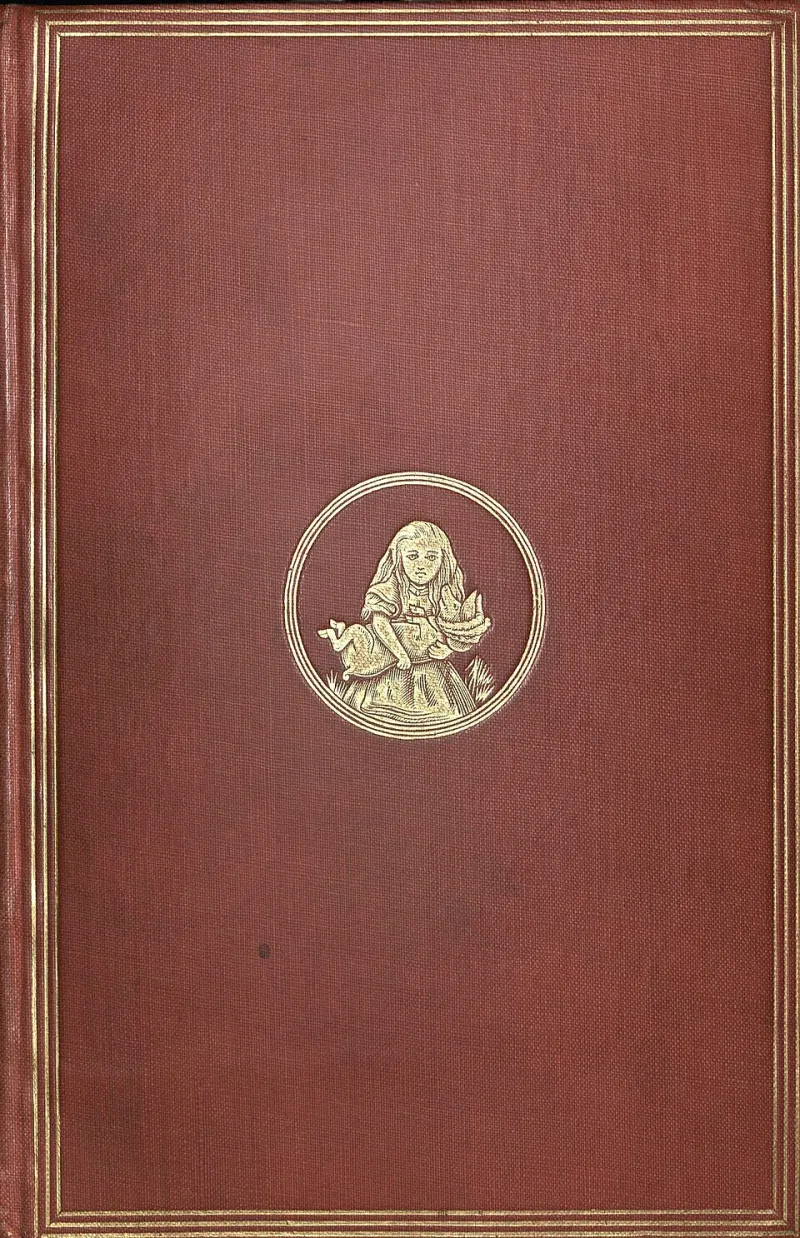
Photo: Lewis Carroll, Public domain, via Wikimedia Commons
Wonderland has always been a mirror. Carroll built it that way — a place where the rules don't apply, where logic loops back on itself, and where the story you think you know can become something completely unrecognizable depending on who's doing the telling. That's why Alice adaptations span such a wild range, from reverent period pieces to complete creative detonations that use Carroll's characters as raw material for something entirely new.
We've ranked 15 of the most notable Alice adaptations across film, TV, stage, games, and the internet by their weirdness factor — meaning how far they drift from Carroll's original text and into creative territory all their own. Lower numbers mean closer to the source. Higher numbers mean strap in.
Let's go down the rabbit hole.
The 'Pretty Faithful' End of the Spectrum
1. The 1903 Silent Film Weirdness Factor: 1/10
The oldest surviving Alice adaptation is a British silent film that's basically a greatest-hits reel of the book's most iconic scenes. It's charming in that antiquated way, and it earns its low score by simply not having the runtime or technology to get weird. A historical curiosity more than a creative reinvention.
2. Jonathan Miller's BBC Production (1966) Weirdness Factor: 3/10
This one is underrated in American fan circles. Miller stripped away the fantasy elements almost entirely, playing Wonderland as a kind of fever-dream of adult social anxiety. The characters are real people, the costumes are Victorian rather than fantastical, and the whole thing has this unsettling, dreamlike realism. Weird in tone, but structurally faithful.
3. Disney's Animated Classic (1951) Weirdness Factor: 4/10
Yes, Disney's version is on the lower end of the weirdness scale. It's visually inventive and it collapses both Carroll books into one narrative, but it largely follows Alice's journey beat for beat. The real innovation here was aesthetic — the color palette, the character designs — rather than structural. This is the version that built the template everyone else would either follow or smash.
The Middle Ground: Reimagined but Recognizable
4. Hallmark's Alice in Wonderland (1999) Weirdness Factor: 5/10
This live-action TV movie packed an absurd celebrity cast — Whoopi Goldberg, Martin Short, Gene Wilder, Ben Kingsley — and leaned into a slightly campy, theatrical energy. It's faithful enough to track if you know the book, but the casting choices and production design give it a distinct flavor. Underappreciated by American audiences at the time.
5. Tim Burton's Alice in Wonderland (2010) Weirdness Factor: 5/10
Controversial placement, we know. Burton's film looks unhinged — all gothic excess and Johnny Depp doing that thing — but the actual story structure is surprisingly conventional. It's essentially a hero's journey bolted onto Wonderland's scenery, with Alice recast as a chosen-one warrior. Weird aesthetically, but narratively pretty safe. The sequel, Through the Looking Glass (2016), scores similarly.
6. NBC's Alice in Wonderland (1999 — the other one) Weirdness Factor: 5.5/10
Wait, there were two major Alice productions in 1999? Yes. NBC aired a miniseries the same year as the Hallmark version, and it's a genuinely interesting adaptation that takes Carroll's themes of identity and growing up more seriously than most. Worth tracking down if you haven't seen it.
7. Dreamchild (1985) Weirdness Factor: 6/10
This one earns its place in the middle tier by doing something most adaptations won't touch: examining the real relationship between Lewis Carroll and Alice Liddell, the girl who inspired the books. Jim Henson's Creature Shop built the Wonderland characters as genuinely disturbing puppets. It's thoughtful, melancholy, and quietly strange.
8. Once Upon a Time in Wonderland (2013-2014) Weirdness Factor: 6.5/10
ABC's Once Upon a Time spinoff dropped Alice into a serialized fantasy adventure with a Jafar from Aladdin as the villain. It's a wild genre mashup that treats Wonderland as a location rather than a concept. Cancelled after one season, but it has a devoted fan community for good reason.
Getting Genuinely Strange
9. Syfy's Alice (2009) Weirdness Factor: 7/10
Syfy's miniseries reimagines Wonderland as a noir-ish parallel world where the Queen of Hearts runs a casino that harvests human emotions. Alice is a judo instructor in present-day New York. It's pulpy, it's fun, and it commits fully to its own internal logic. A hidden gem for fans who want something that genuinely takes the premise somewhere new.
10. The Looking Glass Wars Series (2004) Weirdness Factor: 7.5/10
Frank Beddor's YA novel trilogy flips the script entirely: Wonderland is real, Carroll's book is propaganda, and Alyss Heart is a warrior princess whose story was deliberately distorted. It's audacious world-building that treats the original text as something to actively push back against. The fan community around this one is passionate.
11. American McGee's Alice / Alice: Madness Returns (2000, 2011) Weirdness Factor: 8.5/10
The video game entries on this list, and they earn their high score. McGee's Alice reframes Wonderland as a manifestation of a traumatized child's fractured psyche, with familiar characters warped into something genuinely disturbing. Madness Returns goes even darker, exploring child abuse and institutional gaslighting. These games changed what Alice could be as a franchise, and their influence on subsequent adaptations — especially in the horror and dark fantasy space — is enormous.
The Deep End
12. Alice (Jan Švankmajer, 1988) Weirdness Factor: 9/10
Czech surrealist filmmaker Jan Švankmajer made an Alice adaptation that uses stop-motion animation, taxidermied animals, and a deeply unsettling visual language to create something that feels genuinely dream-logic strange. It's less an adaptation than an excavation of the unconscious material underneath Carroll's text. Not for everyone, but essential viewing for serious fans.
13. Pandora Hearts (2006 manga / 2009 anime) Weirdness Factor: 9/10
This Japanese manga and anime series uses Alice in Wonderland as a mythological framework for an elaborate dark fantasy epic. The connections to Carroll's work are loose but intentional — the B-Rabbit, the chains, the Abyss. It's a fascinating example of how the Alice mythos travels across cultures and gets completely recontextualized in the process.
14. Various TikTok 'Dark Alice' Universes Weirdness Factor: 9.5/10
Yes, we're counting this. There's a whole ecosystem of TikTok creators who have built elaborate alternate-universe Alice lore — some horror-inflected, some cottagecore, some genuinely experimental — that exists entirely in short-form video. The collaborative, iterative nature of this content means it evolves in real time, with creators building on each other's interpretations. It's fan fiction as living document, and it's fascinating.
15. The Video Game 'Alice in Wonderland' for Nintendo DS (2010) Weirdness Factor: 10/10
We're giving the top spot to this one not because it's the most artistically ambitious, but because it represents the most chaotic possible relationship to its source material. Technically a tie-in to the Tim Burton film, it plays like a completely different game, references both Burton and Carroll seemingly at random, and contains design choices that suggest nobody involved was entirely sure what they were making. It is, in its own special way, perfectly Wonderland.