You Are Not the Real Alice: How Modern Adaptations Are Making AI the New Queen of Hearts
Wonderland has always run on a specific kind of dread. Not the jump-scare variety. The slow, creeping kind — the sense that the rules keep changing, that your sense of self is being eroded one nonsensical encounter at a time. Carroll's original Alice spends most of her journey being told she's wrong about who she is. The Caterpillar challenges her. The mirror doubles her. The whole place seems designed to make her question whether she ever had a stable identity to begin with.
So it's not exactly a surprise that creators in 2024 and beyond are reaching for artificial intelligence and deepfake technology as their go-to metaphor when they want to update that particular flavor of existential horror. What is surprising is how well it works.
The Doppelganger Was Always the Point
Let's back up for a second. The Alice mythos has a long, well-documented obsession with doubles. Looking-glass reflections, twins, cards with two identical faces — the franchise has been playing with the idea of the fake self for over 150 years. Fan communities on sites like Tumblr and Reddit have catalogued this compulsively, tracking every mirror moment across adaptations from the 1951 Disney film to the American McGee games to the various graphic novel reimaginings that have flooded shelves over the last decade.
What changes when you swap out a literal mirror for a generative AI model? Everything, and also nothing.
The core terror is identical: something that looks exactly like you, speaks in your voice, wears your face — but isn't you. What shifts is the mechanism, and with it, the cultural weight. A mirror-twin reads as magical, dreamlike, safely contained within the fairy tale logic of Wonderland. An AI-generated replica reads as plausible. It reads as Tuesday. And that's exactly what modern adaptations are exploiting.
When the Glitch Becomes the Monster
Several recent projects — including indie game releases and short-form digital series that have circulated heavily through Alice fan spaces — have started building their antagonists around this premise. Instead of a Queen of Hearts who screams orders from a throne, you get a system. A network. Something that monitors, replicates, and eventually replaces.
One pattern that keeps emerging: the AI villain isn't presented as overtly evil. It presents itself as helpful. As protective. It generates a version of Alice that is better — more compliant, less troublesome, easier to manage. The horror isn't that the fake Alice is monstrous. The horror is that she's preferable to the people in power.
That's a meaningful update to Carroll's original critique. The Red Queen and the Queen of Hearts were always stand-ins for arbitrary authority — power that demands conformity and punishes difference. Translating that into an algorithmic system that literally optimizes away your individuality is a pretty clean metaphor, and creators seem to know it.
Deepfakes as the New Looking Glass
The deepfake angle is where things get particularly interesting from a fan theory perspective, and honestly, fan communities have been ahead of this curve for a while. Long before any official adaptation leaned into it, Alice fan fiction writers were exploring what it would mean for the White Queen — often coded as Alice's idealized self — to be revealed as a fabrication. A projection. Something generated to keep Alice moving in the right direction.
When adaptations catch up to fan speculation, it usually means the cultural anxiety is real and widespread. Deepfake technology has been a live wire in American pop culture discourse since roughly 2018, tied up in conversations about consent, authenticity, political manipulation, and the reliability of video evidence. Plugging that anxiety into a franchise that was already about not being able to trust what you see? That's not a stretch. That's a natural evolution.
What's smart about the best executions of this concept is that they don't just slap an AI villain onto an otherwise traditional Wonderland story. They restructure the whole logic of the world around it. If the Queen of Hearts is a system rather than a person, then the card soldiers aren't mindless enforcers — they're instances. Copies running the same base model. The court isn't arbitrary; it's optimized. And that makes it scarier, because arbitrary cruelty you can sometimes outmaneuver. A system that has already predicted your countermoves is a different problem entirely.
What Alice Loses When the Threat Gets Real
There's a tension worth sitting with here, though, and fan discussions have been wrestling with it pretty openly. Part of what makes Wonderland work as a space for identity exploration is that it's safe in a specific way — the unreality creates distance. Alice can lose herself and find herself because the whole thing is framed as a dream, a game, a story. When you replace surreal logic with actual technology, some of that distance collapses.
A few critics within fan communities have argued that AI-villain Wonderlands risk feeling more like Black Mirror episodes than Alice adaptations — that they trade the liberating strangeness of Carroll's world for something more claustrophobic and didactic. It's a fair point. There's a version of this concept that becomes a lecture about tech ethics wearing a pinafore.
The adaptations that avoid that trap tend to be the ones that keep the emotional core intact. Alice's journey was never really about the external threats. It was about a girl being told, over and over, that her perception of herself is wrong — and choosing to believe in herself anyway. If the AI villain serves that arc, it works. If it replaces that arc with plot mechanics about defeating the algorithm, it loses the thread.
The Fan Community Sees It Coming
What's been fascinating to watch, from a Return of Alice perspective, is how tuned in the fan community already is to this shift. Threads breaking down the symbolism of digital doubles in new Alice content are getting serious traction. Fan artists have been creating work that imagines Alice confronting her own deepfake — sometimes as horror, sometimes as something more ambivalent, more philosophical.
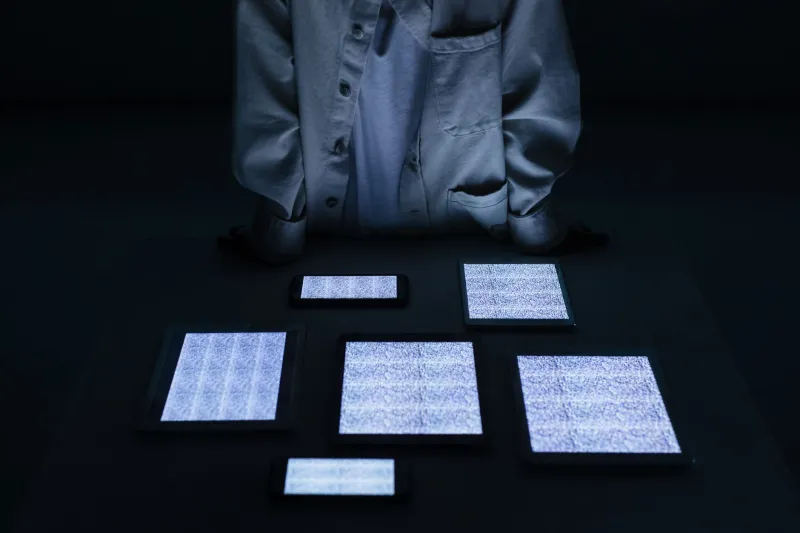
There's a recurring image in fan art right now that's worth noting: Alice standing in front of a screen showing a version of herself that's slightly too perfect. Slightly too still. It's become almost a visual shorthand in certain corners of the community for the specific anxiety these adaptations are tapping into.
That's what good franchise evolution looks like. The symbol updates, but the question underneath stays the same. Who are you? the Caterpillar asked. The AI just has better data on why you're probably wrong about the answer.
Wonderland has always been the place where that question lives. Turns out it doesn't need a rabbit hole to get there anymore. It just needs a convincing enough copy of you, waiting on the other side of the screen.